Organizational Governance and Accountability
Set expectations for organizational decision-making, Cabinet accountability, communication and leadership roles across the College.

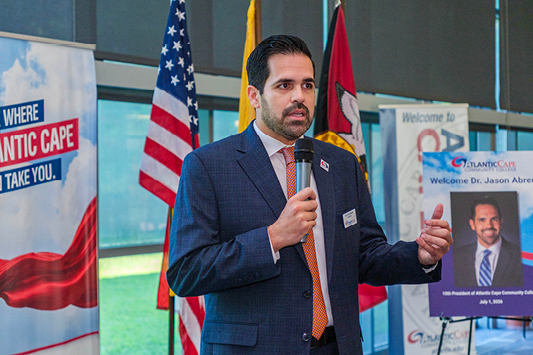 Atlantic Cape welcomed Dr. Jason Abreu as its 10th president on July 1, 2026. Since then, President Abreu has met with College staff, faculty, students, trustees and alumni, as well as members of the community, business entrepreneurs and numerous civic leaders throughout Atlantic and Cape May counties.
From these conversations, President Abreu has outlined three areas of focus that will guide Atlantic Cape through its 2026-27 academic year: Student Success, Engagement and Operational Efficiency. These areas align with our mission, vision, values and strategic plan. They provide a framework for how the College will prioritize our work, make decisions, allocate resources, measure progress, and identify opportunities to continuously improve the experience of our students and employees.
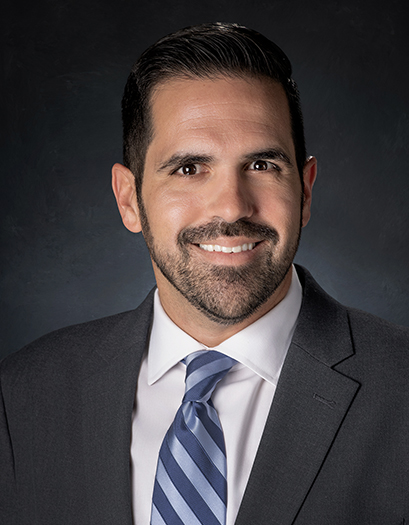 It is with great appreciation and a deep sense of responsibility that I present Listen, Learn and Lead: A 100-Day Presidential Plan. My first 100 days as the College’s 10th president will provide an important opportunity to engage with our Buccaneer community, listen to a wide range of perspectives, learn from our institutional experiences and data, and begin identifying what will help position Atlantic Cape for continued success.
Listen begins with being present and accessible to our students, faculty, staff, trustees, alumni, community and industry partners, and the many individuals who care deeply about the future of Atlantic Cape. Through campus visits, meetings, conversations, events and community engagement, I will seek to understand the experiences, aspirations, perspectives and ideas that shape our College.
Learn comes from examining the broader institutional context by reviewing strategic focus areas, institutional data and outcomes, enrollment and student success indicators, operational and financial considerations, student and employee experiences, and community and workforce needs. Together, these sources will provide an important foundation for understanding where Atlantic Cape is today and where we have the greatest potential.
Lead is about translating what I hear and learn into purposeful, measurable and accountable action. This plan outlines how that work will take shape over the first 100 days. It will identify themes that emerge through the process, recognize areas of strength, highlight opportunities and begin to define the focus areas that can guide our collective work and inform future priorities. I look forward to listening, learning and leading alongside the Atlantic Cape community as we shape the next chapter together.
With appreciation and commitment,
Jason Abreu, Ed.D.
President
 Listen, Learn and Lead provides a structure for the 100-day period, creating space to listen broadly, learn from our people, experiences and evidence, and keep students at the center of the work. The following objectives, focus areas and phases provide a framework for listening, learning and leading throughout the first 100 days.
| Focus Area | Description |
|---|---|
| Organizational Governance and Accountability | Set expectations for organizational decision-making, Cabinet accountability, communication and leadership roles across the College. |
| Institutional Understanding | Build a broad understanding of the leadership team, faculty and staff. Examine College culture, Strategic Plan goals, enrollment, finances, operations, areas of strength and opportunities for growth. |
| Employee Experience, Belonging and Support | Explore how our employees experience the College and what helps them feel informed, valued, connected and equipped to thrive and support students. |
| Student Experience and Success | Review the student lifecycle from inquiry through graduation to understand the experiences and touchpoints that influence enrollment, persistence, progression and completion, and identify opportunities to strengthen student success. |
| Academic and Workforce Alignment | Assess program relevance, transfer opportunities, workforce outcomes, adult learner needs and alignment with the economic and social needs of the region. |
| Institutional Effectiveness, Accreditation and Outcomes | Connect the Middle States Self-Study, Strategic Plan, institutional focus areas and outcome measures to identify evidence-informed areas for attention, strengthen accountability and support continuous improvement. |
| Community and Regional Connection | Expand relationships with elected officials, education partners, employers, nonprofits, alumni, families and community partners who contribute to Atlantic Cape’s regional impact. |
Set expectations for organizational decision-making, Cabinet accountability, communication and leadership roles across the College.
Build a broad understanding of the leadership team, faculty and staff. Examine College culture, Strategic Plan goals, enrollment, finances, operations, areas of strength and opportunities for growth.
Explore how our employees experience the College and what helps them feel informed, valued, connected and equipped to thrive and support students.
Review the student lifecycle from inquiry through graduation to understand the experiences and touchpoints that influence enrollment, persistence, progression and completion, and identify opportunities to strengthen student success.
Assess program relevance, transfer opportunities, workforce outcomes, adult learner needs and alignment with the economic and social needs of the region.
Connect the Middle States Self-Study, Strategic Plan, institutional focus areas and outcome measures to identify evidence-informed areas for attention, strengthen accountability and support continuous improvement.
Expand relationships with elected officials, education partners, employers, nonprofits, alumni, families and community partners who contribute to Atlantic Cape’s regional impact.
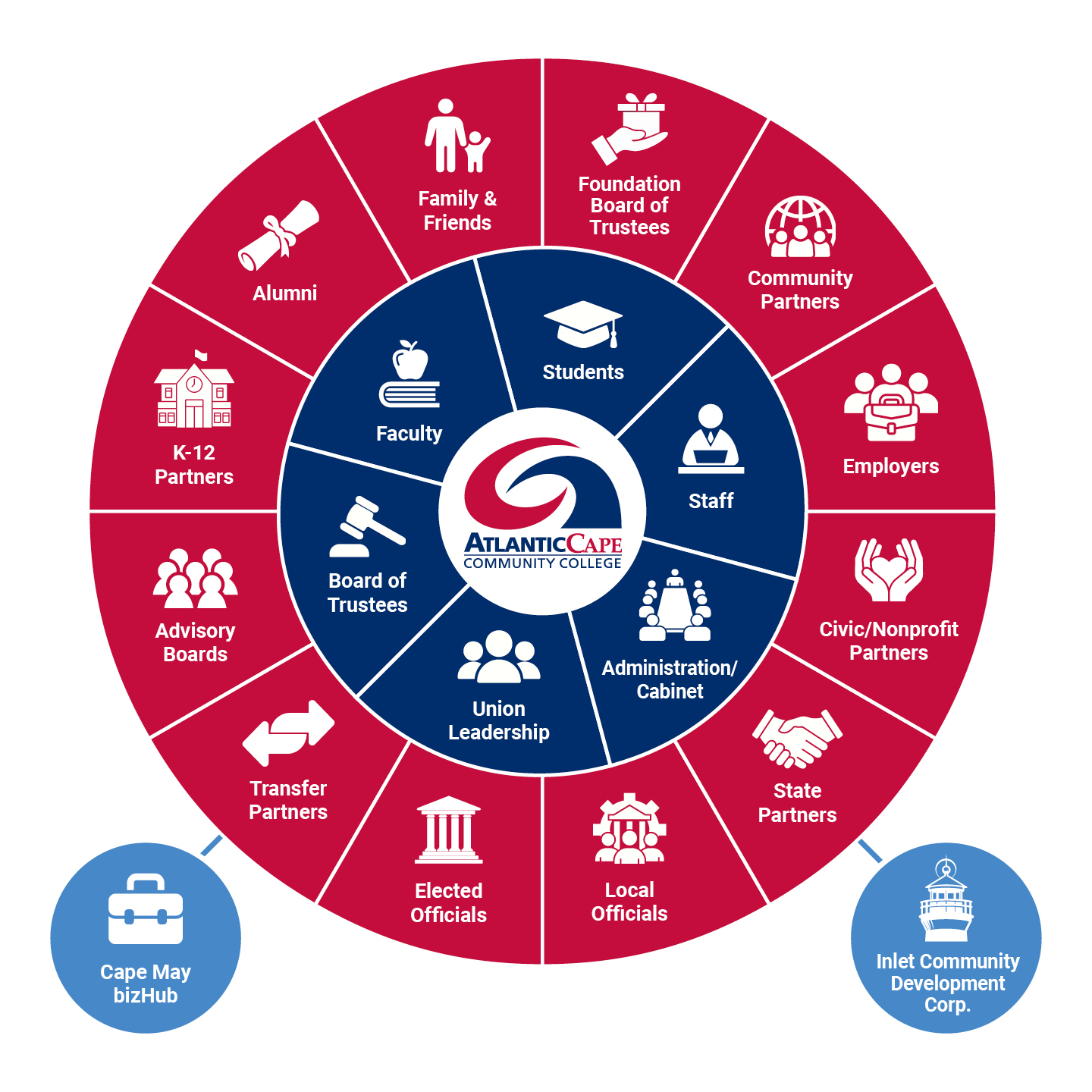
The ACCC Ecosystem represents the broad network of people and organizations connected to the College. Engaging across this network will bring a range of perspectives into the first 100 days while deepening understanding and strengthening relationships.